My children had been told about Victoria Falls – Mosi-oa-Tunya, “the smoke that thunders” – since we arrived in Kenya, mostly by other expat parents who had the particular quality of enthusiasm that comes from knowing something is about to be experienced rather than simply described. We finally went in the April holidays, flying to Livingstone in Zambia via Johannesburg, and the falls were everything we had been told and specifically more than photographs suggest, which is saying something because the photographs are extraordinary.
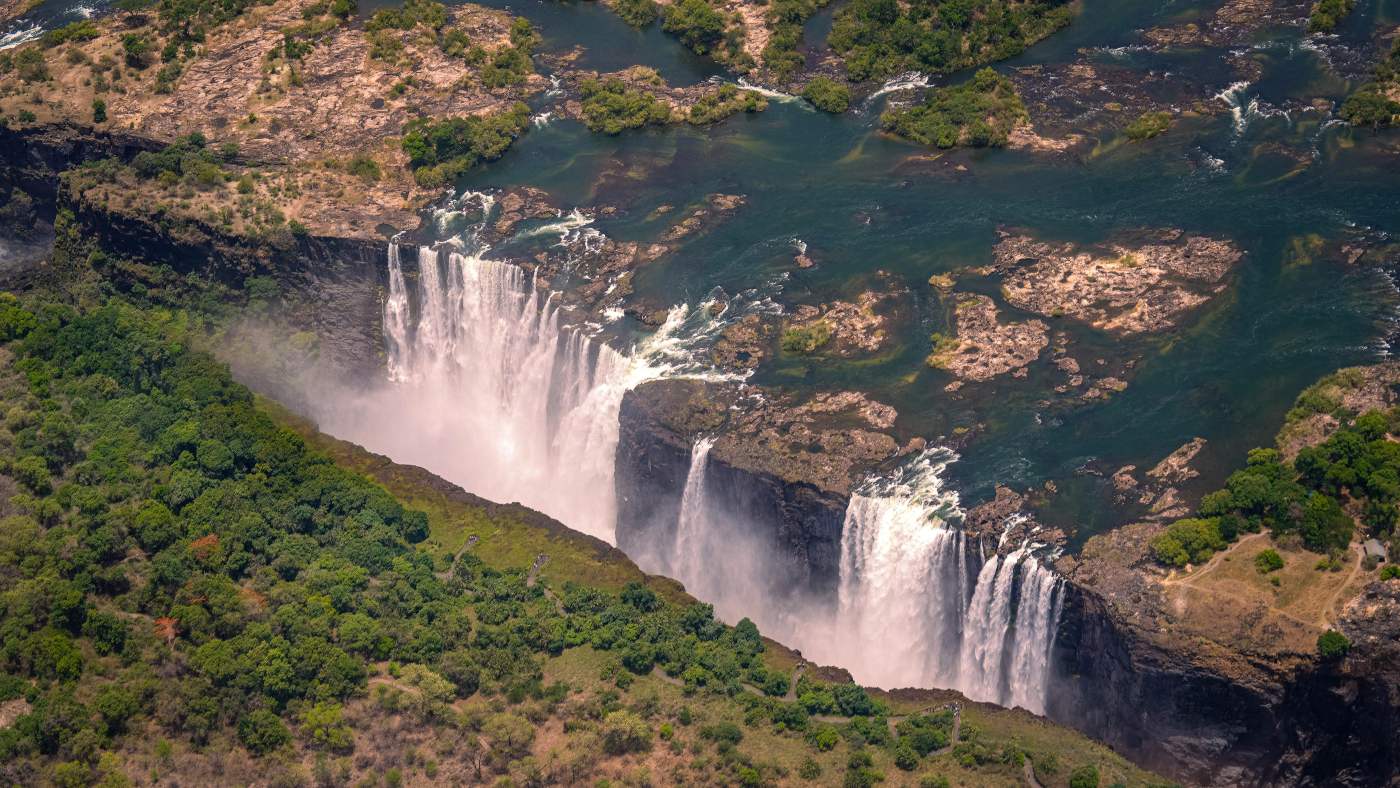
Victoria Falls is listed as a UNESCO World Heritage Site and is the largest waterfall in the world by combined width and height – 1,708 metres wide and up to 108 metres tall, generating a mist cloud visible from forty kilometres away. When the Zambezi is running at full flow, between February and May, the spray soaks you within minutes of approaching the viewpoints. In the dry season, July to October, the flow is lower and the views of the rock face are clearer. Both have their merits and neither is the wrong time to visit.
Getting There from Nairobi
The most common routing from Nairobi is via Johannesburg to either Livingstone (Zambia, on the south side of the falls) or Victoria Falls Town (Zimbabwe, on the north side). Both airports are roughly equidistant from the falls themselves, connected by a bridge across the Zambezi. The total travel time from Nairobi is typically around five to six hours including the Johannesburg connection.
The Zimbabwe versus Zambia question comes up for every visitor and the honest answer is that both sides are excellent, each with different advantages. The Zimbabwe side (Victoria Falls Town) has more extensive views of the falls themselves and is a more developed tourist town. The Zambia side (Livingstone) has a wilder, less touristy feel and access to the Zambian national parks. For a first visit, many families choose Zimbabwe for the falls and Zambia for safari; the Kazungula Bridge now makes crossing between the two countries relatively straightforward.
The Falls Themselves
The approach to the falls from the Zimbabwe side takes you through a national park, and the sound builds before you see anything – a low, continuous roar that the forest seems to absorb and redirect before you reach the viewpoints. At the first viewpoint, the scale lands immediately. It is not possible to prepare adequately for the noise, the spray, the size of it. My son stood at the railing and was silent for a full two minutes, which for a twelve-year-old is not nothing.
The walk along the viewpoints takes about an hour at a comfortable pace and offers seventeen different named viewpoints along the cliff face opposite the falls. At full flood, the spray is so intense that the closer viewpoints require a rain poncho – you are not getting wet, you are getting soaked, as thoroughly and completely as if you had walked through a heavy rain shower. Children find this wonderful. Waterproof camera protection is essential.
Activities for Families
Beyond the falls themselves, the area offers a significant range of activities at different intensity levels. For families with children of most ages, the river sunset cruise on the upper Zambezi is reliably excellent – a two-hour boat trip upstream of the falls (safely above the point where the river accelerates toward the drop), watching hippos, elephants on the riverbank, crocodiles on sandbanks, and exceptional birdlife as the sun goes down over the water.
White water rafting below the falls is world-class and extremely intense – it runs on the gorge section below the main falls and is genuinely one of the more dramatic rafting experiences available anywhere. The minimum age is typically twelve to fourteen depending on the operator and the water level. If your children are old enough and up for it, it is extraordinary. If not, the calmer upper river activities are fully satisfying.
The helicopter flight over the falls – called the “Flight of Angels” – is expensive but delivers views that the ground simply cannot. From above, the full scale of the falls is comprehensible in a way that the viewpoints, which show you one section at a time, do not quite achieve. Shearwater Adventures is one of the established operators for this and other activity bookings in the area.
Safari Add-On
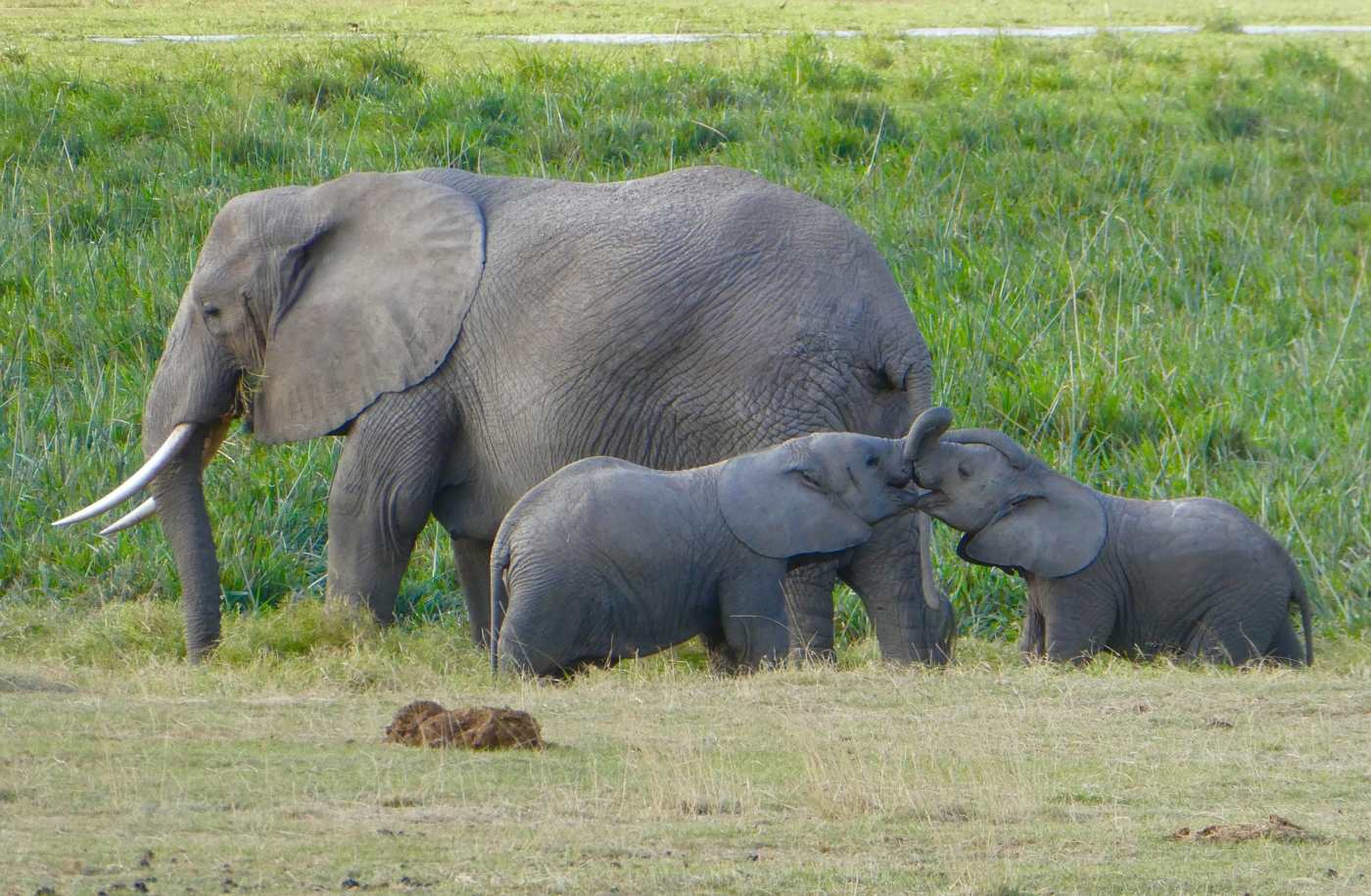
Victoria Falls is within striking distance of some excellent safari options, making it natural to combine the falls with a park visit. Chobe National Park in Botswana is ninety minutes from Livingstone and is famous for the largest elephant population in the world – herds of two or three hundred animals moving through the riverine forest is a genuinely staggering sight. Hwange National Park in Zimbabwe is further but offers exceptional wildlife. Kafue National Park in Zambia is less visited and correspondingly less expensive.
A Victoria Falls and Chobe combination – two nights at the falls, two nights on a Chobe river safari – is one of the best family itineraries available in southern Africa and justifies a full week of the December school holiday. Children who have done Kenya safaris will find Chobe different in character and richness – the concentration of elephants is unlike anything else in Africa.