
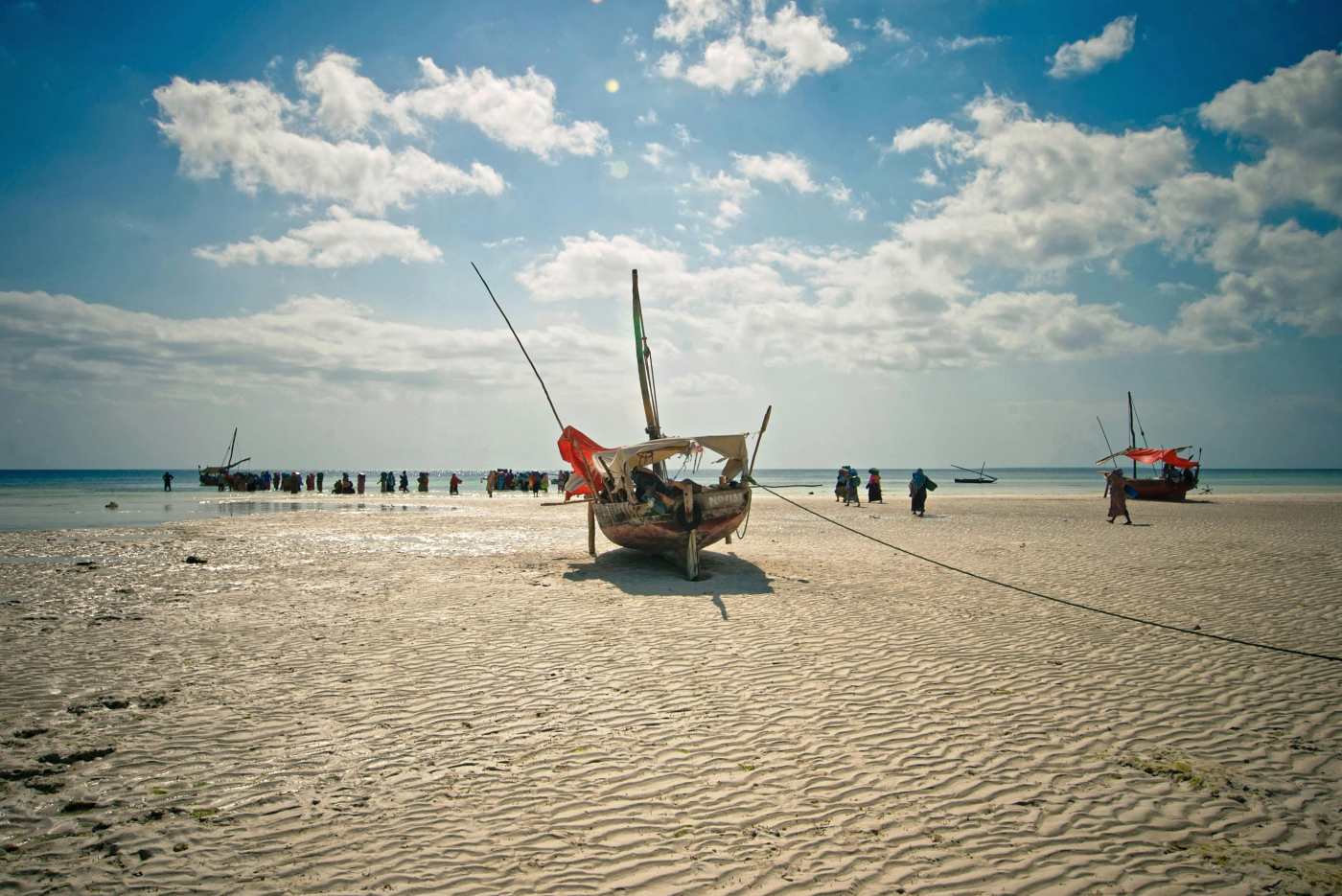
I had been living in Nairobi for almost a year before I realised that Zanzibar – the Zanzibar, the one I had seen in photographs and thought of as a dream destination for some future well-funded trip – was an hour and fifteen minutes away by plane. An hour and fifteen minutes. About the same as flying from London to Edinburgh. The realisation recalibrated my sense of where I was living in a significant way, and we were on a flight to Stone Town within six weeks.
For expat families in Nairobi, Zanzibar should be near the top of any travel list. It offers a combination of things that is genuinely rare: extraordinary beaches, a UNESCO World Heritage town with centuries of Swahili-Arab-Indian history, excellent food, warm water year-round, and a pace of life that does something necessary to people who have been living in a large, fast, demanding city. It is different enough from Kenya to feel like a genuine change, and close enough to feel entirely reasonable for a long weekend.
Getting There
Several airlines fly Nairobi to Zanzibar, with the main options being Kenya Airways, Precision Air, and Jambojet. The journey takes between one hour fifteen minutes and one hour forty-five minutes depending on the routing. Kenya Airways flies direct and is the most reliable option. Prices vary significantly – booking two to three months ahead yields much better fares than booking close to travel dates, and the school holiday periods (August, December, April) are predictably expensive.
Visas: Zanzibar is part of Tanzania, and as such most travellers will need a Tanzanian visa. East African Community members (Kenya, Uganda, Rwanda, Burundi, South Sudan, Tanzania, and DRC) are in a single-visa arrangement that simplifies things, but check the current status before you travel as these arrangements are periodically revised. The East Africa Tourist Visa covers Kenya, Uganda, and Rwanda but does NOT cover Tanzania, which catches people out. Get a Tanzania visa separately.
Stone Town
Stone Town is the historic heart of Zanzibar and a UNESCO World Heritage Site recognised for its exceptional Swahili coastal trading city architecture. It is a labyrinth of narrow lanes, carved wooden doors, mosques, and markets that rewards getting lost in entirely. The night market at Forodhani Gardens on the seafront is a Zanzibar institution – dozens of stalls cooking everything from grilled lobster to Zanzibar pizza (a thin folded crepe filled with egg, meat, and vegetables, cooked on a griddle and entirely delicious) as the sun goes down over the Indian Ocean.
For children, Stone Town is manageable in small doses. The lanes are hot and narrow and the historical context requires some explanation to land properly, but a morning of wandering with an ice cream from one of the seafront shops, punctuated by stops at the House of Wonders and the Old Fort, is entirely achievable with children of most ages. What children tend to remember most from Stone Town is the smell – cloves, cardamom, salt water, frangipani – and the cats, hundreds of them, thin and self-possessed, draped on every warm surface.
The Beaches
The beaches of Zanzibar are the reason most people go and the reason most people return. The north and northeast coast – Nungwi and Kendwa in particular – has the best swimming at most tide states, as the reef configuration means the water stays swimmable even at low tide. The east coast – Paje, Jambiani – is beautiful but significantly affected by tides, with long stretches of exposed reef flat at low water that make swimming impossible for hours at a time. This matters a great deal if you have children.
For families, Nungwi or Kendwa on the northern tip is where I would base us. The water is warm, the sand is extraordinary, and the beach here faces west, which means sunset from the beach is a daily ceremony. The accommodation ranges from budget guesthouses to boutique hotels and a handful of genuinely high-end resorts, and there are good options at every price point within five minutes’ walk of the water.
Spice Tours and Activities
Zanzibar is called the Spice Island for a reason – for centuries it was the world’s leading producer of cloves, and the island still produces cloves, nutmeg, cinnamon, and vanilla. A spice farm tour is a half-day activity that works particularly well for children because it is hands-on: you see, touch, and smell the actual spices growing, and a good guide will have you identifying cinnamon from its smell before you can see the tree. The guides inevitably fashion elaborate hats from banana leaves and produce things wearing them for photos, which goes down extremely well with children under ten.
Dolphin tours run from the village of Kizimkazi on the south coast, where spinner and bottlenose dolphins are resident in the channel and can be found most mornings. These tours vary in quality and it is worth seeking out operators who follow responsible dolphin-watching guidelines – no harassment, no chasing, no feeding. The dolphins are genuinely wild and they will approach boats on their own terms, which is a better experience for everyone.
Zanzibar is one of those destinations that I have recommended to every expat family who has arrived in Nairobi and asked where to go first. It is never wrong. It is close, it is beautiful, it is manageable, and it is different enough from Kenya to feel like a proper journey. Go for at least four nights. Eat the lobster at Forodhani. Let the children get lost in Stone Town for twenty minutes – they will find their way out, and they will talk about it for months.