If someone asked me to design a national park specifically for families with young children, I would design Amboseli. Compact enough that drives are short. Wildlife concentrated around the swamps in ways that make sightings reliable. A backdrop – Kilimanjaro filling the entire northern horizon – so improbable and so beautiful that even very small children look at it with a kind of wordless attention. And elephants. So many elephants, so close, that first-time visitors routinely sit in silence for twenty minutes at a waterhole just watching them and forgetting entirely that they were supposed to be doing other things.
We have been to Amboseli four times as a family, at different children’s ages, and each trip has been different in character and equally worthwhile. Here is what I know about making it work.
Why Amboseli Works for Families
The key advantage Amboseli has over the Maasai Mara for families with young children is manageability. The Mara is vast and game drives are long – you can spend two hours in the Land Cruiser before finding your first significant sighting, and for a six-year-old, two hours is an eternity that requires significant management. Amboseli’s swamp system concentrates wildlife in predictable locations. Within twenty minutes of leaving your lodge, you are typically watching something worth watching. Game drives can be shorter without feeling incomplete.
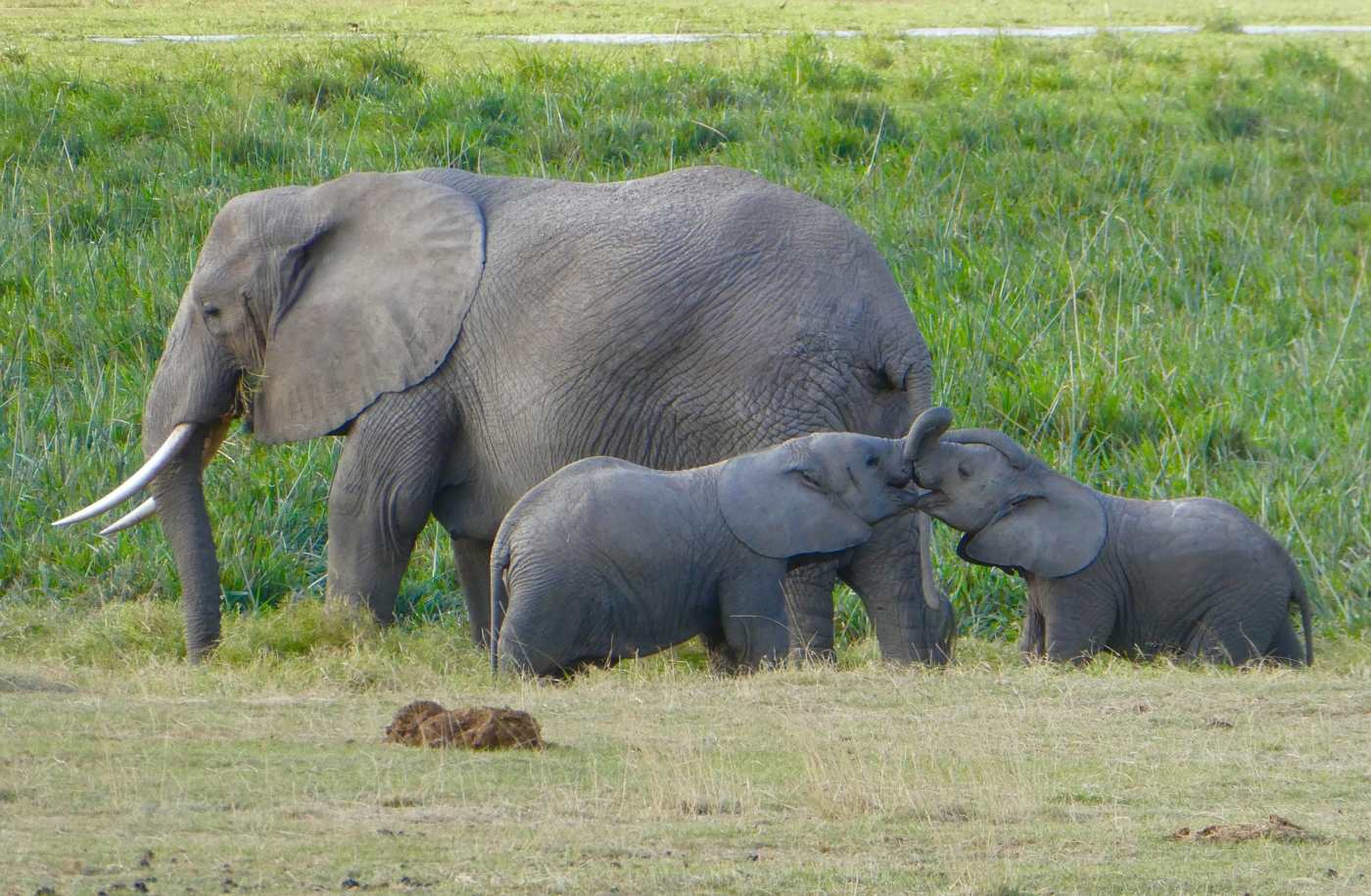
The elephant population is the other reason. Amboseli is home to one of the most studied and well-documented elephant populations in the world – the Amboseli Elephant Research Project has been running since the 1970s and has identified and named every individual elephant in the ecosystem. Many guides know these elephants personally, and game drives here become something qualitatively different from standard wildlife viewing – more like being introduced to characters in a story you are partway through. Besides, unlike Masai Mara, Amboseli is relatively close to Nairobi, which is particularly important of you’re going on safari with your kids. So if you’re a worried about the distance from Nairobi, Amboseli National Reserve can be a better alternative.
For children, elephants are the gateway wildlife experience. They are enormous – impossible to miss, impossible to feel unmoved by – and they exhibit behaviour that children intuitively understand: mothers protecting calves, calves playing in mud, family groups moving with a visible collective intelligence. Watching a calf of two months old navigate a waterhole with its entire extended family paying careful attention is the kind of thing that generates questions from children for days afterwards. Why is the mother standing so close? Why did that elephant spray water on the other one? What are they saying to each other?
The Mountain
Kilimanjaro. I do not have new ways to describe the experience of looking at it, so I will just say: it looks impossible, it looks painted, it is significantly larger than any photograph suggests, and children react to it with an uncomplicated awe that is worth the trip on its own. The mountain is clearest at dawn and sometimes at dusk; the middle of the day it is usually clouded over. This is another argument for early morning game drives – you get the wildlife in their most active state and the mountain in its most spectacular.
On our second trip to Amboseli, my son – he was eight – woke at five-thirty without being asked, got dressed in the dark, and presented himself at the vehicle twenty minutes before departure time because he did not want to miss the mountain at sunrise. He is not a morning person. Amboseli does things to children.
Where to Stay
There are lodges inside the park and camps just outside the boundary, and both work well. Inside the park, Amboseli Serena Lodge and Ol Tukai Lodge are the main options – comfortable, well-run, and with pools that the children will want to spend the middle of the day in, which is actually sensible since the heat between eleven and three is significant and wildlife is least active during those hours anyway.
Outside the boundary, there are a number of tented camps and conservancy lodges that offer a wilder, quieter experience. Porini Amboseli Camp in the Selenkay Conservancy is excellent for families who want a more intimate tented experience without the lodge infrastructure. The conservancy also offers guided walks with Maasai guides, which older children find fascinating and which are simply not available inside the national park itself.
Practical Tips for Families
The drive from Nairobi to Amboseli takes four to five hours, primarily on reasonably maintained tarmac with a rough section near the park gate. It is doable with children but long. Many families fly – there are scheduled flights from Wilson Airport to Amboseli airstrip, and the cost is justified by the time and energy saved. Air Kenya operates this route. The flight takes about forty-five minutes and offers extraordinary aerial views of the Rift Valley and Kilimanjaro.
You probably want a relatively shoirt weekend getaway for your family? This article highlights some of the places you can visit.
Dust in the dry season is significant. Amboseli is named for it – “salty dust” in Maasai – and in July and August it can be considerable. Bring lightweight buff-style scarves or face coverings for the children, protect camera gear carefully, and accept that everyone will come back from a game drive looking slightly terracotta-coloured.
The best time to visit is the dry seasons: January to February, and June to October. The long rains in April and May make roads difficult and some areas impassable. The short rains in November and December bring the landscape back to green but can limit game drives, and the wet grass makes the dust, at least, a non-issue.